
Cocktail kits · Shopify Plus · Code, performance and security review · Git and branches
Spicehaus:AI agents running the operations of a Shopify Plus store
Twenty themes, and not one of them a restore point
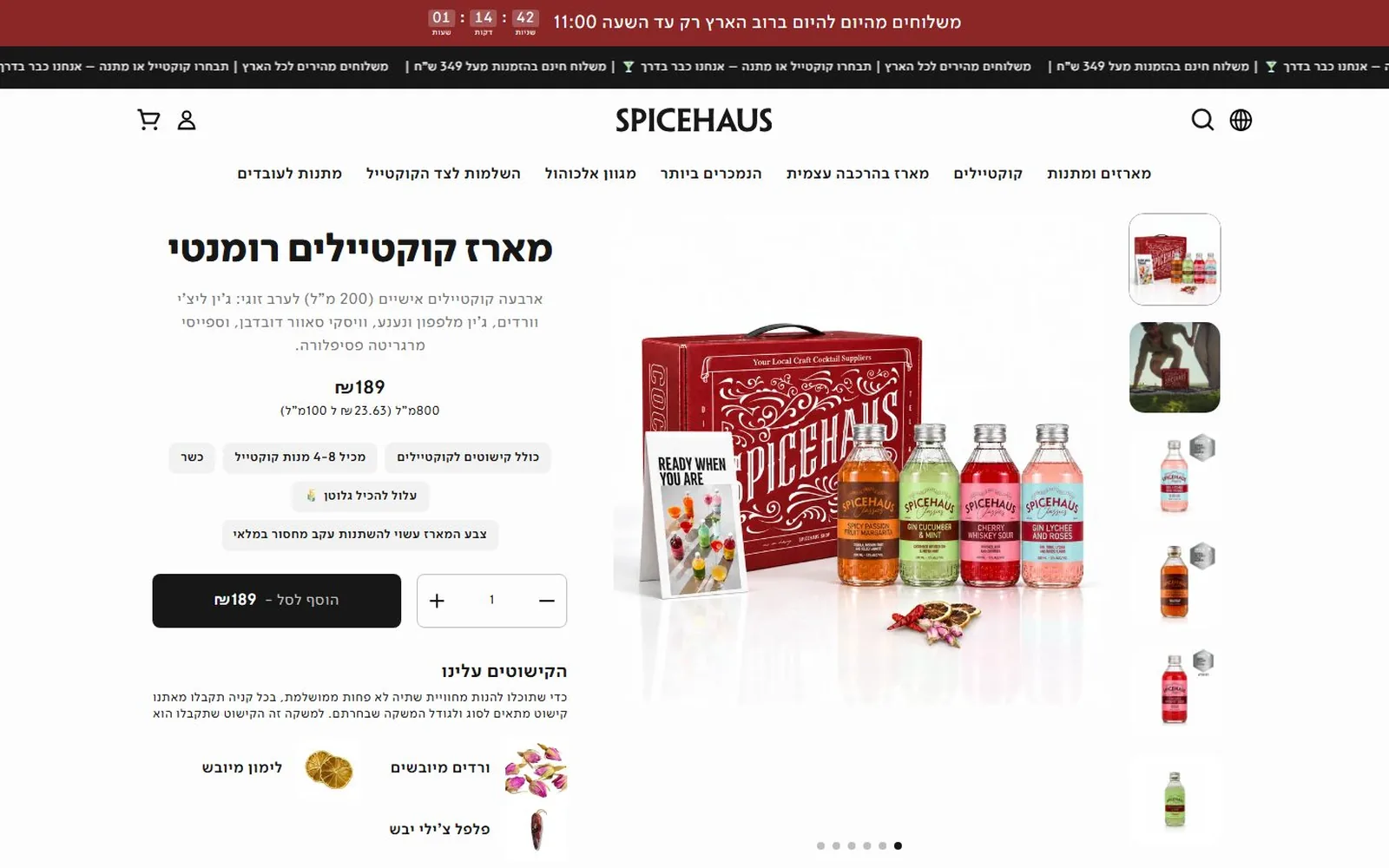
Spicehaus sells ready-made cocktails and gift boxes. The store runs on Shopify Plus, with a theme written in Vue and compiled from source code the client did not have.
When we arrived, the store had 20 themes: one live, four copies of the same base theme, an abandoned attempt to move to a different theme, and drafts nobody remembered creating. There was no version control and no history to go back to. A third of the code in the live theme was dead: 24 of 66 components were not loaded by any page.
We went in through the code
We went in through the code, measured before fixing, stopped a fault that was breaking 26 pages in production, and handed the client a team that now works with Git, branches and Pull Requests. The work was run by an environment of AI agents I built for Spicehaus, covering code, security, optimization and visuals, working through branches and permissions.
First, touch nothing
We pulled a copy of the live theme into our own repository and saved every pull as a commit. That gave the client change history for the first time, and let us spot when another vendor pushed a new build to the site.

Measure, don't guess
The external report the client received recommended adding dimensions to the product images, but the space for the images was already reserved. We built a measurement system that loads a page under controlled conditions, measures how much it jumps and points to the component that caused the jump: five pages, two screen sizes, two connection types and seven loads for each combination.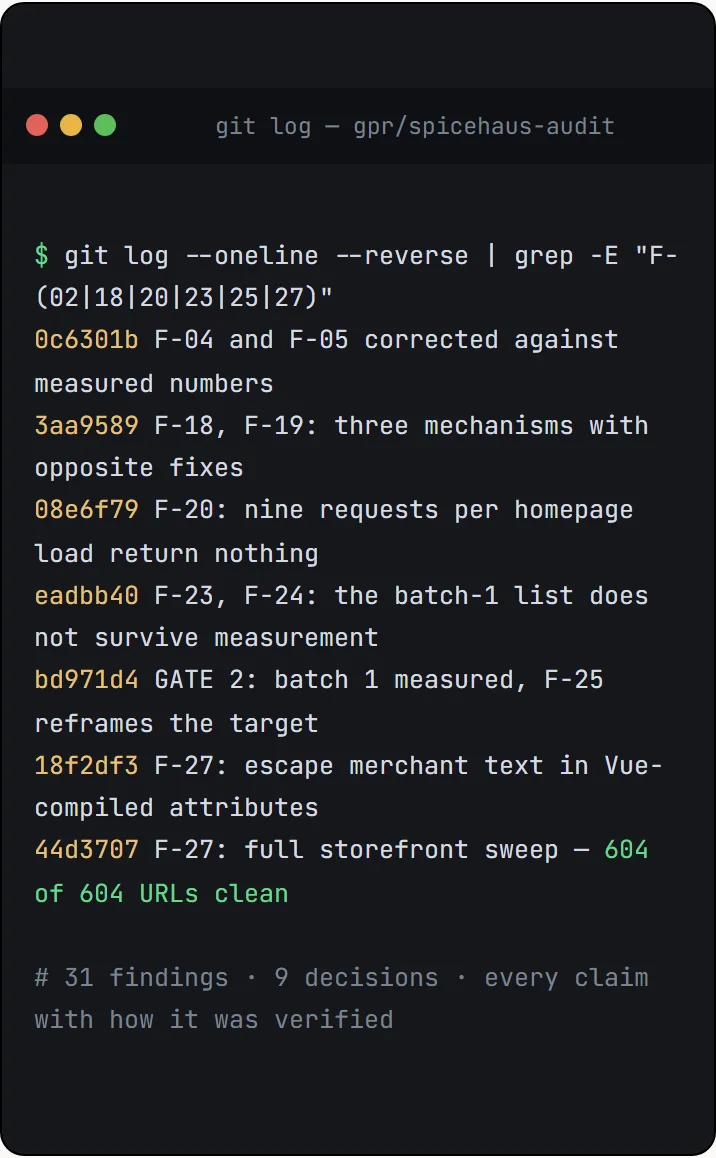
The answer was at the top of the page
On the home page, the top menu contributes 0.153 to the layout shift score (CLS) and on its own passes Google's threshold of 0.1. The announcement bar contributes 0.081 and the main banner 0.063. The product carousels, which had been the focus of the work until then, contribute 0.029 and came in only sixth.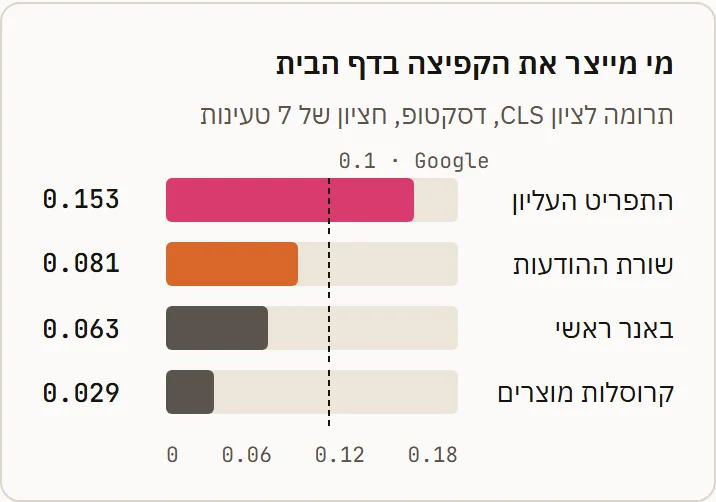
A tool that refuses to write to the live site
Every fix was built in a separate, unpublished theme. The upload script reads our theme ID from a single file and refuses any other target. After every upload we pulled the live theme again and compared: zero differences, three times in a row.
Placeholder blocks
We reserve in advance the place where content will appear, so nothing gets pushed around when it loads. In the most widely used component in the theme, which appears in 21 templates, the shift dropped from 0.26 to 0.11. In the home page carousels it dropped 78%, and the worst loads disappeared.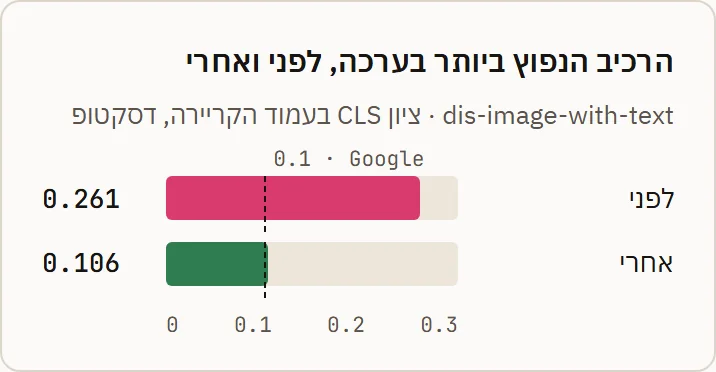
One quotation mark took down 26 pages
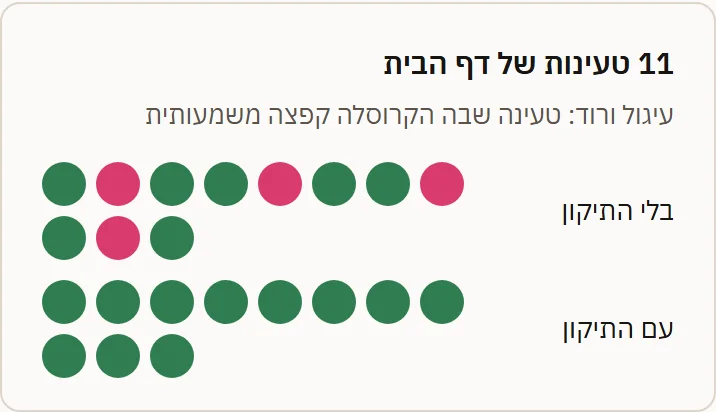
The titles of 24 products include the Hebrew abbreviation for ml, which contains a quotation mark. An update that replaced Vue's development build with the production build exposed an old bug: the product name went into an HTML attribute without encoding, the quotation mark cut it off, and Vue refused to compile the page. We fixed nine places in seven files, including seven that hadn't blown up yet. It was our only write to the live site, made with the client's approval and with a restore point.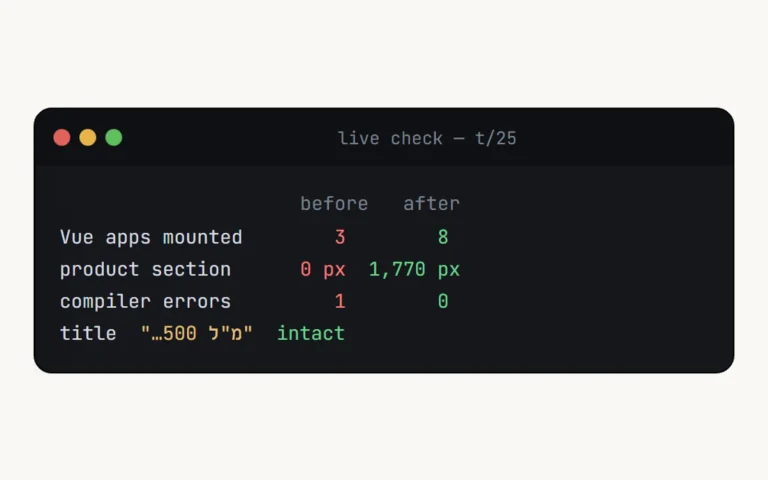
Three leaks you couldn't see on screen
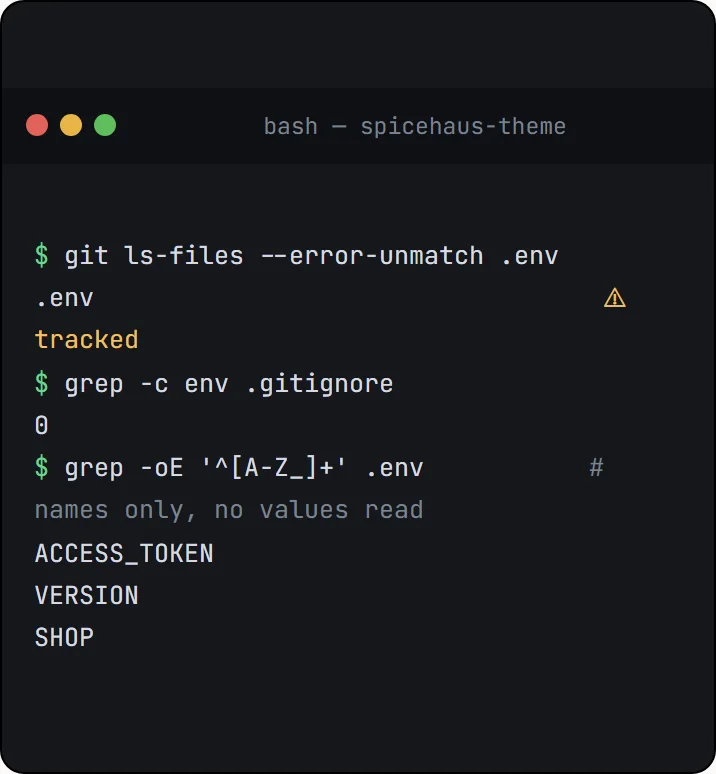
An installed app printed the store's account data on every public page, code from an app that had been removed kept publishing a list of 30 past orders, and a settings file with a Shopify token was stored inside the code repository. We documented what was exposed without reading the values, and passed the decision to the client along with the way to close each one.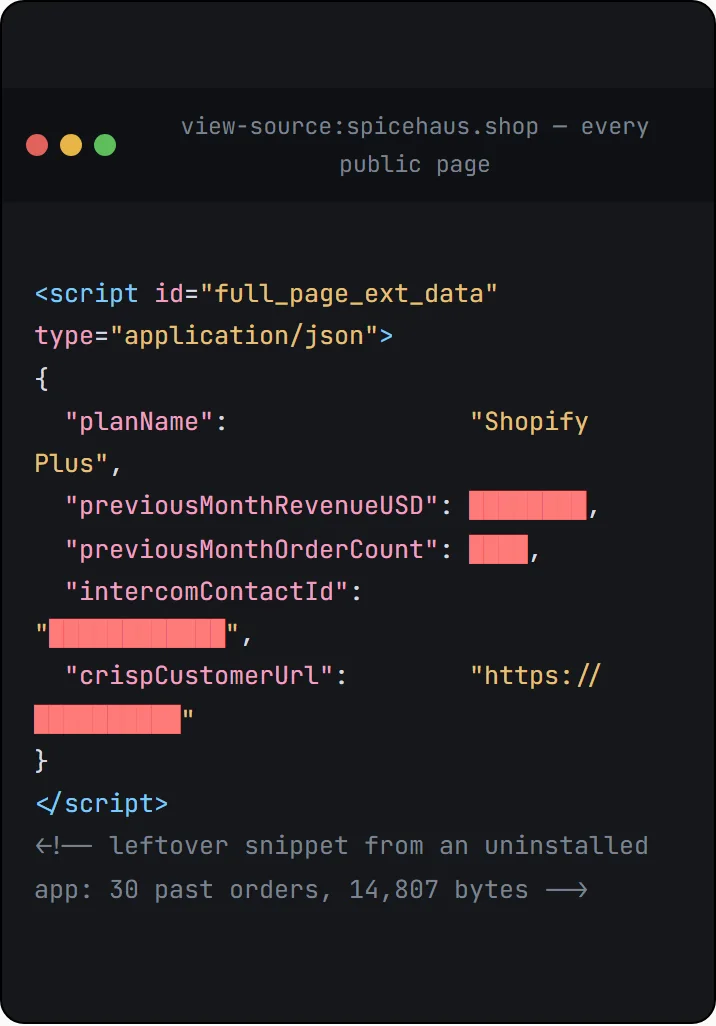
Who is really running in the store
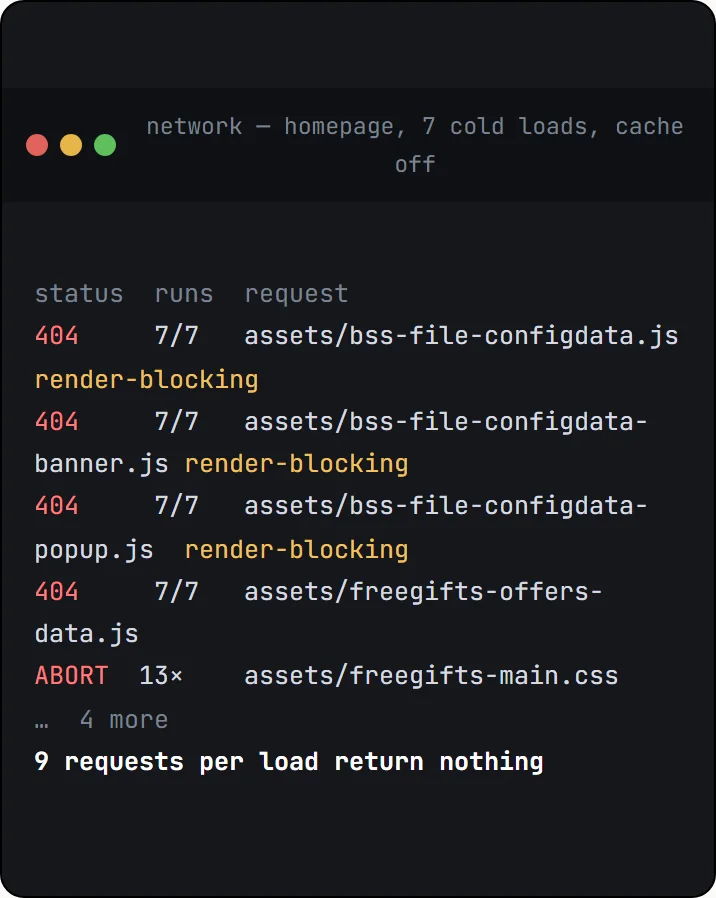
We mapped 38 external vendors and cross-checked each one against what is actually installed. On every home page load, nine network requests came back empty, and three of them blocked the page from rendering until they failed.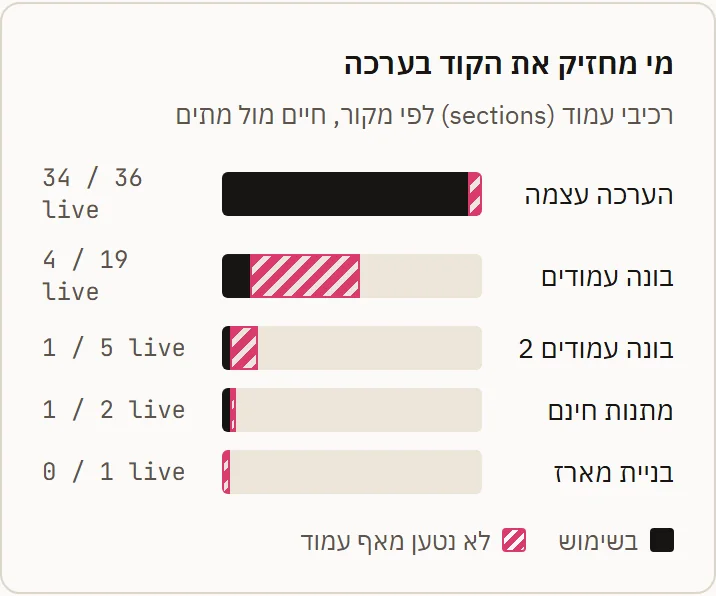

One repository. Branches. Numbers you can check.
604 of 604 URLs in the store were checked after the fix, with zero broken. The 26 pages that fell in production were working again the same day, and nine lines of code were the entire fix.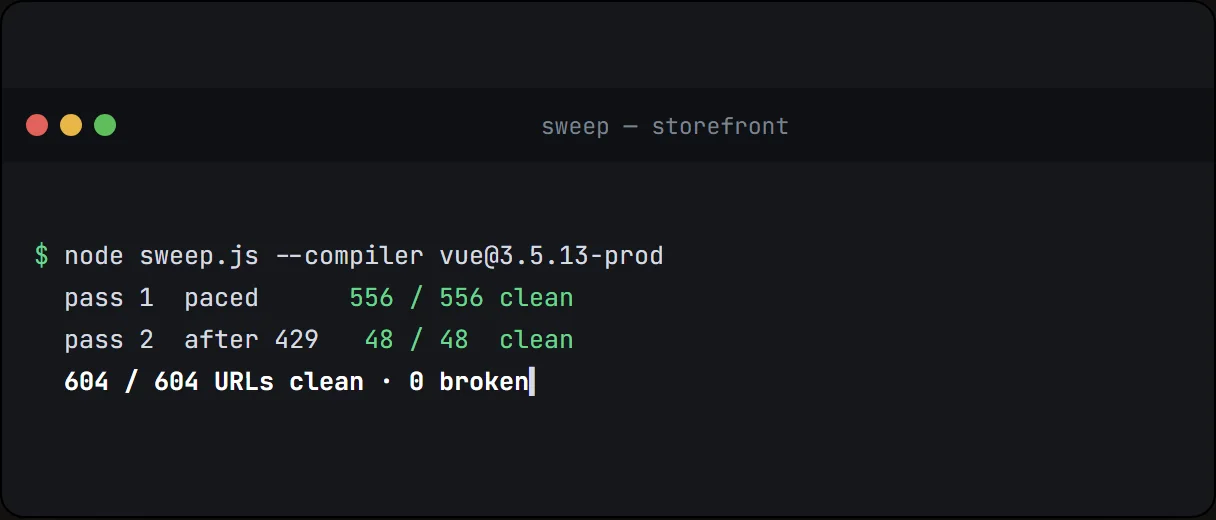
The layout shift of the most widely used component in the theme dropped 59%. The client is left with a Git repository that is the source of truth, a documented fix with a restore point, three leaks with a way to close each one, a measurement system, and 31 findings and 9 decisions, each with how it was verified.
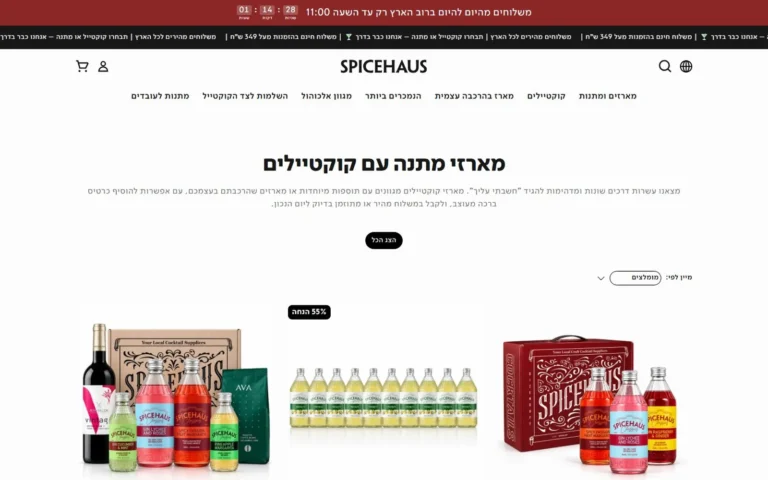
The storefront: what Spicehaus customers see.



One line separated the repository from the site
When we got access to the theme's code repository, we compared it with the live site: 65 of 66 components were identical, and so were all the snippets and all the layout files. One line differed in the entire codebase, and it was our fix. Their upload script pushes the whole folder to the site, so the next upload would have brought back the August fault.
We had permission to push straight to master, and we didn't use it. We opened a branch and a Pull Request with nine lines, an explanation of why now, and a merge left in their hands. Permission is a capability. The decision belongs to the client.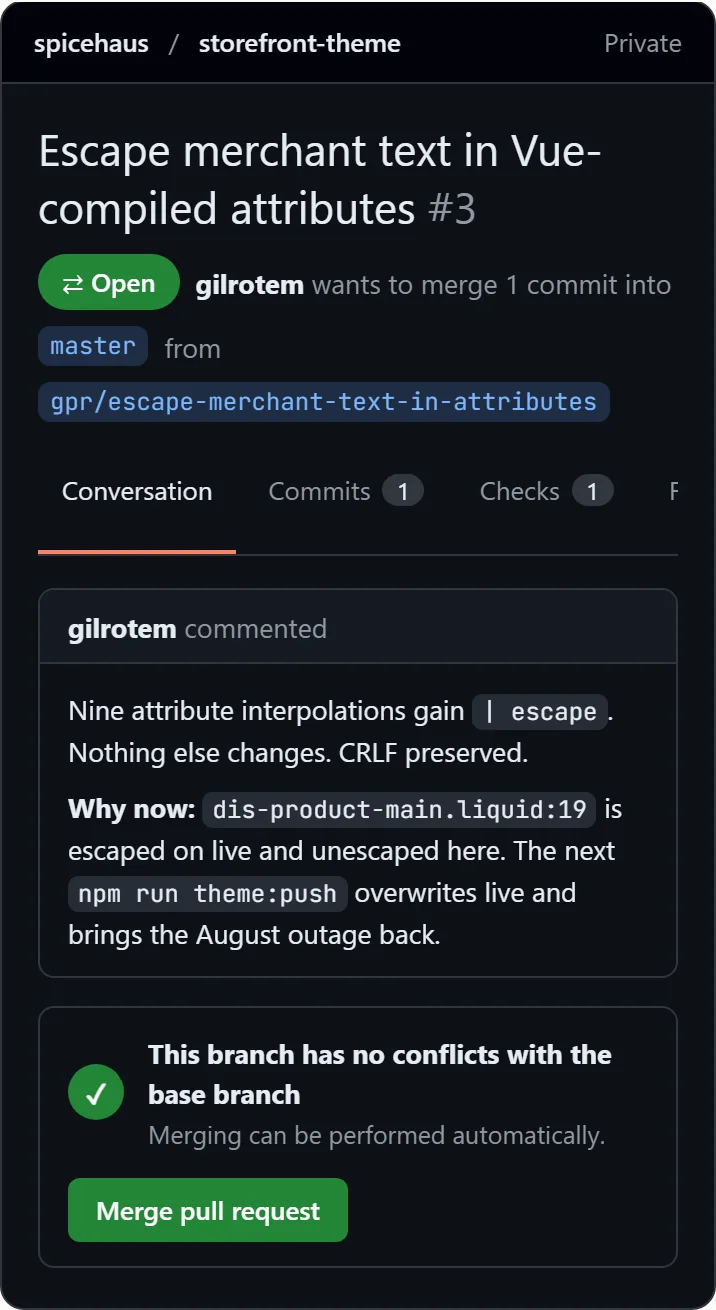
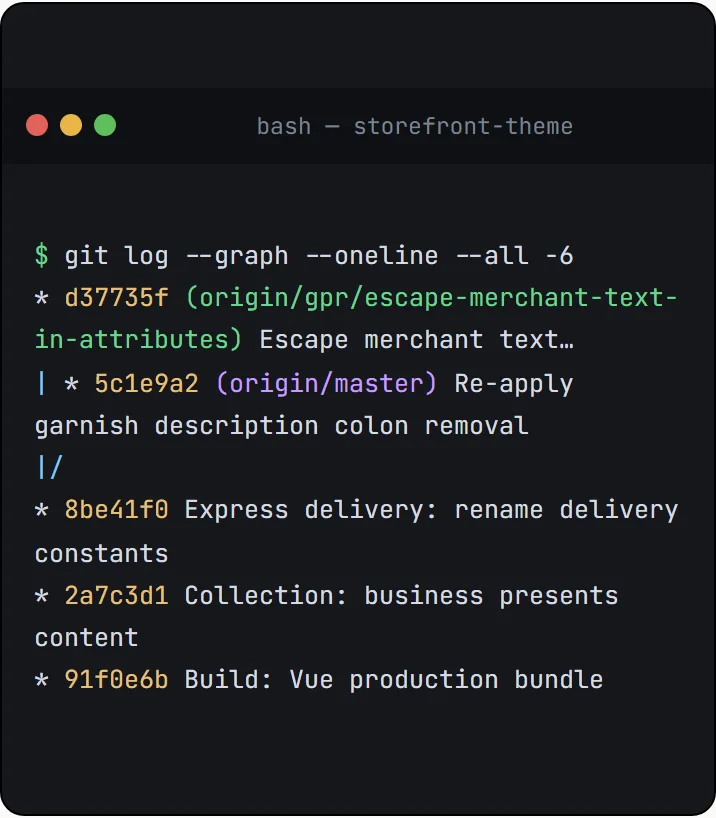
Today the code lives in one repository, and every change goes through a branch, review and merge before it reaches the site. The Spicehaus team holds the code and builds from it themselves, with no dependence on the previous development company.


How many teams are working on the same code at your company?
If they keep stepping on each other's toes, tell me where it gets stuck.