
TRUE BEAUTY · Medical aesthetics · Content system · Custom code
Digital Helga:a content system that writes in Helga Rekanati’s voice
Why an ordinary model wasn't enough for Helga
Helga Rekanati runs TRUE BEAUTY by Helga Rekanati, a medical aesthetics clinic (helga.co.il). Her voice is recognizable at once: the authority of someone who works with skin every day, a sharp stance against promises of "instant results", and a vocabulary of her own.
Ask a language model to write about skin and it writes like every other site. Smooth, correct text that could carry the name of any clinic in Israel. Her clients come looking for exactly what others don't say, so text like that does nothing for her.
I built the system about a year ago. Models were still immature then, and working with AI agents was something only a handful of AI engineers did. Getting a model to sound like one particular person, through a whole article and every single time, took work nobody had a recipe for yet.
What I built for her
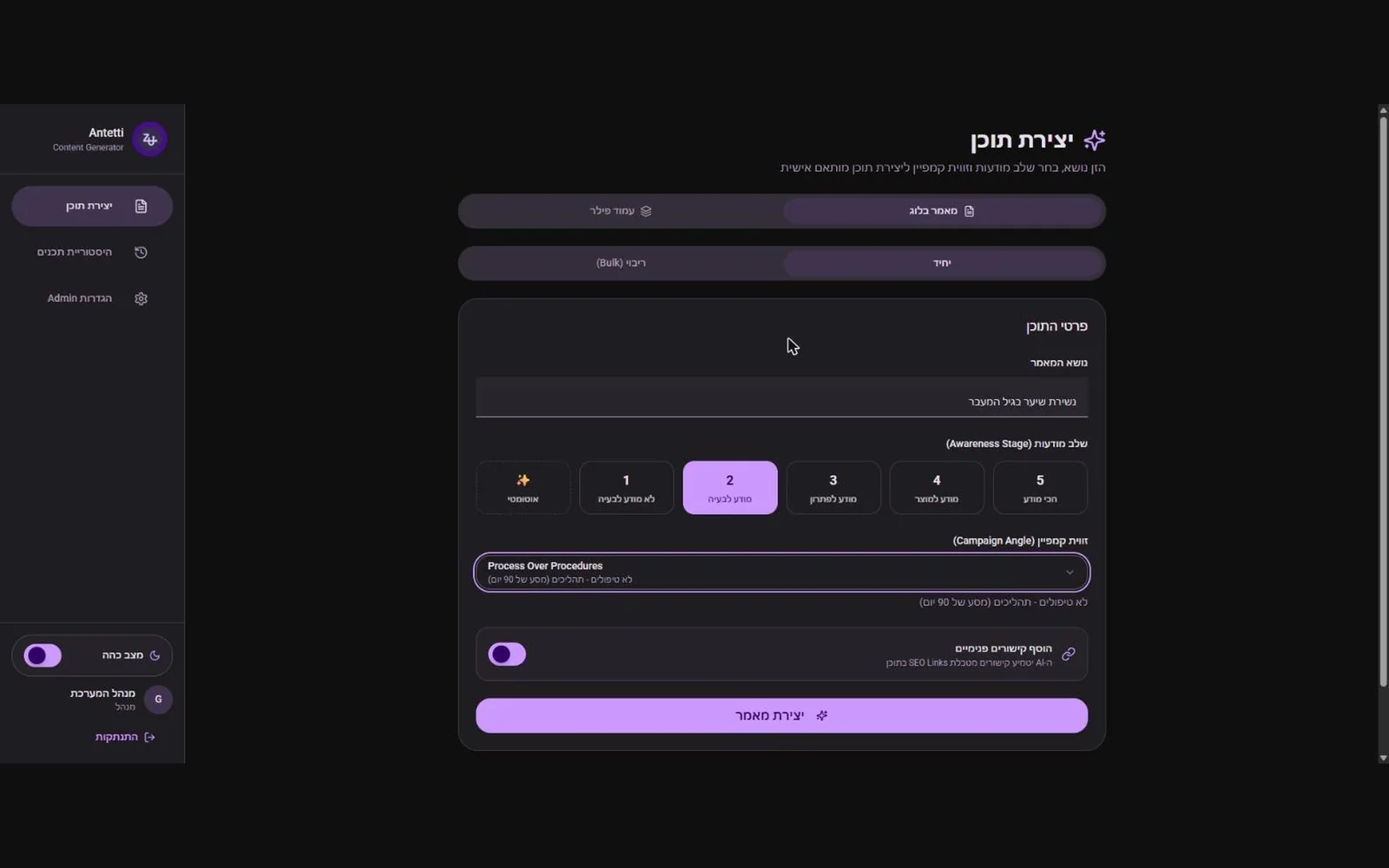
Before writing a line of code I sat down with Helga to work out how she talks: her jargon, what she prefers, how she approaches a treatment and its technical side. Those sessions gave me the marketing angles for her range of products. On that groundwork I built a system that writes in stages. It takes a topic, picks an angle for it, and breaks it down according to how much the reader already knows. The code was written for her at GPR, and all of it runs on GPR's own infrastructure.
Antetti
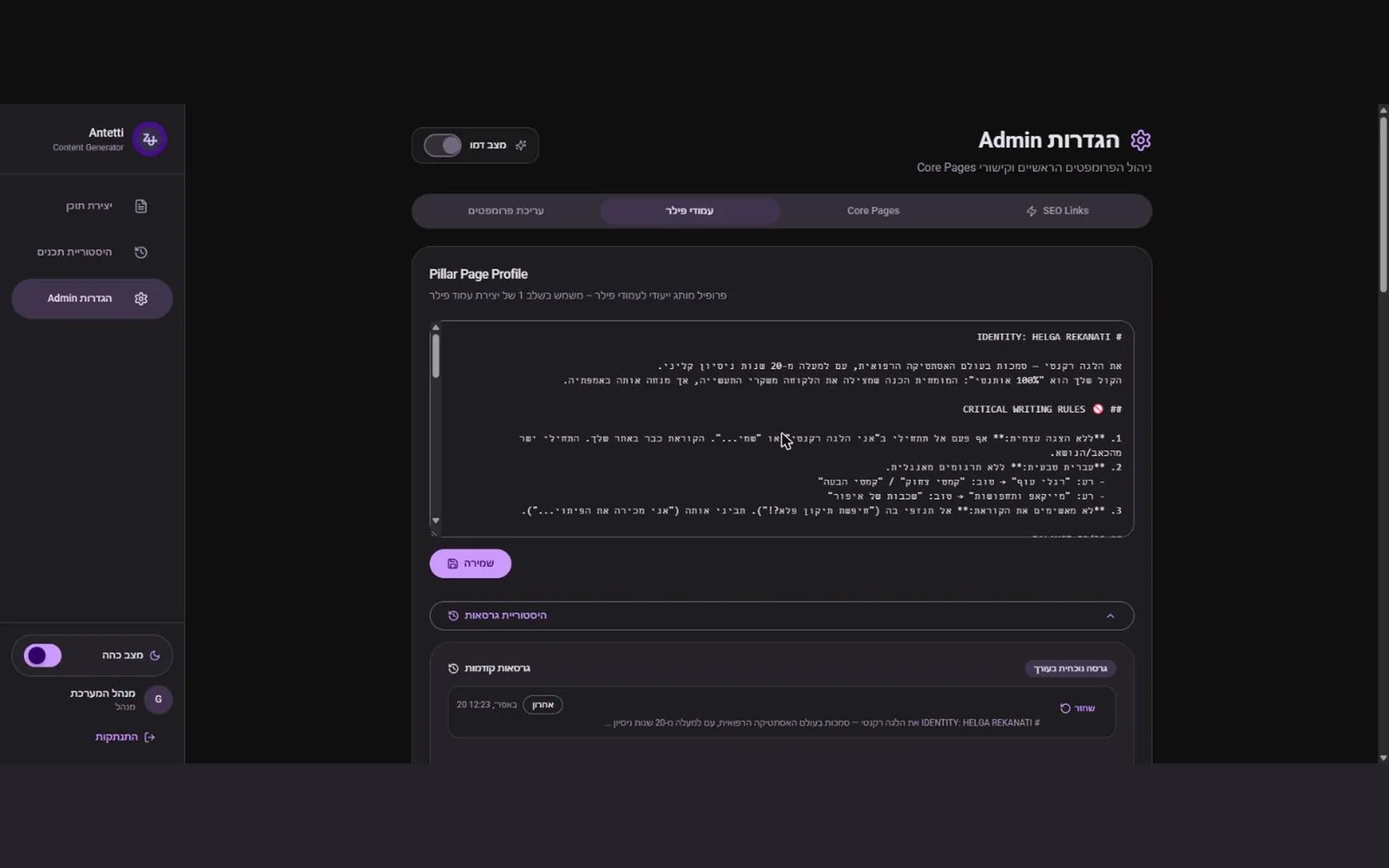
The tool's writing persona, a human writing style I trained to sound exactly like Helga. It was built on hundreds of her texts and documents, a decade of her content and in-depth research, and I tuned the last details with her, one meeting after another.
Awareness stages
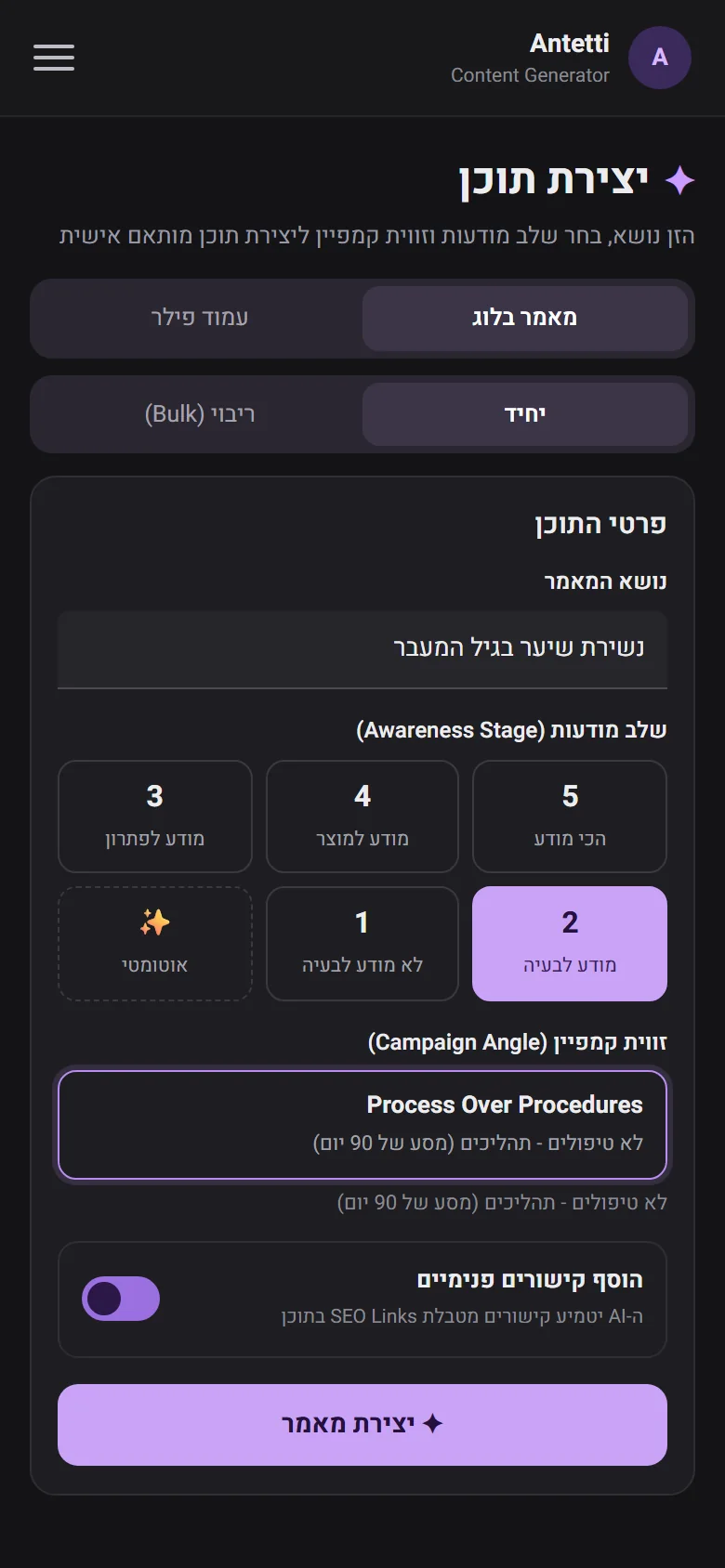
Every article starts from how much the reader already knows. There are five stages, from "unaware" of the problem to "most aware", plus an automatic setting where the model works out the stage itself.
Marketing angles
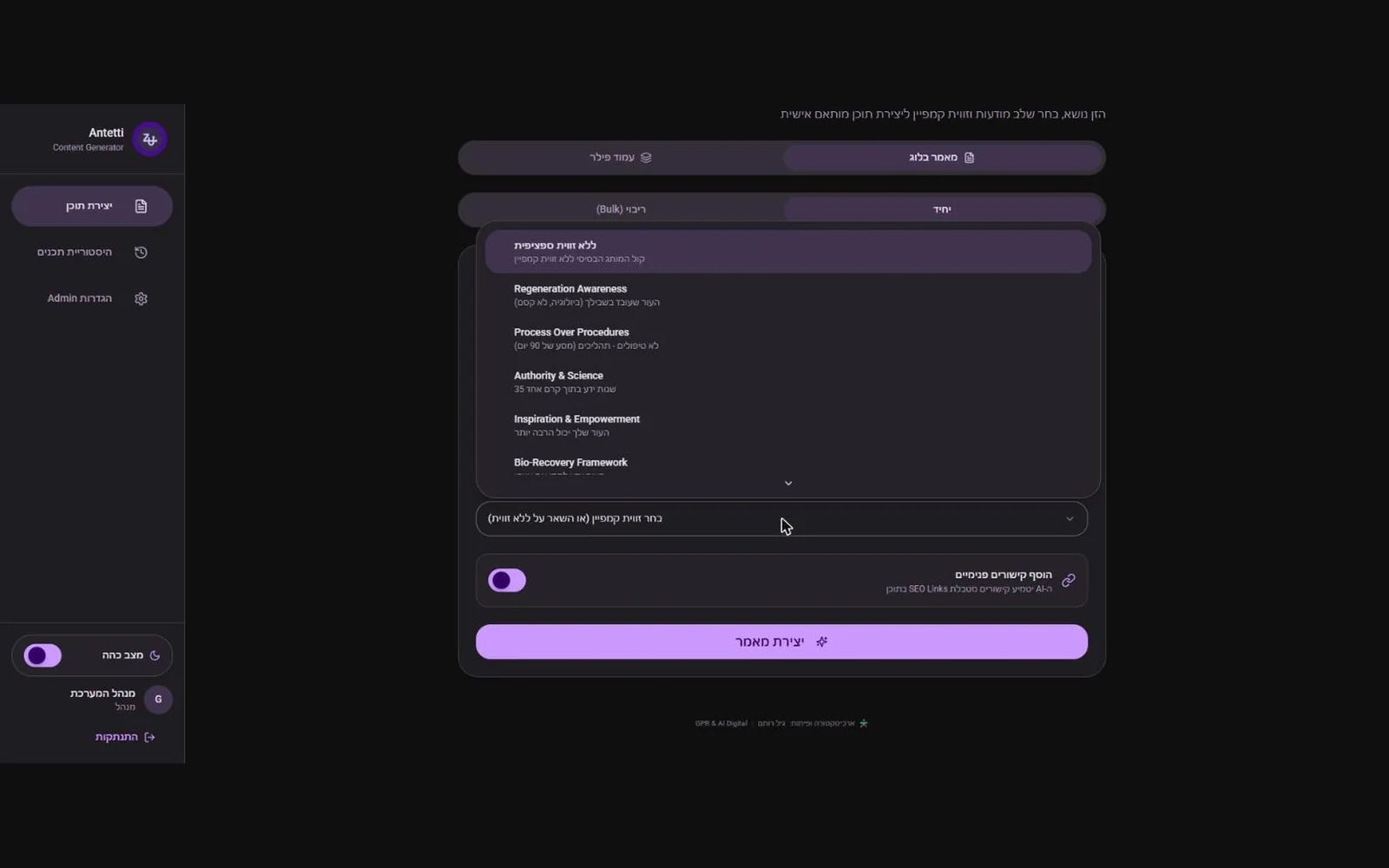
A list of campaign angles in her own language, such as Process Over Procedures ("not treatments, processes") or Skin Language ("the skin doesn't lie"). An article is written from one angle, or in the brand's base voice with no angle at all.
Two agents, one after the other
An identity agent writes as Helga: who is speaking, what she believes, which words she uses and which she never would. Then an SEO agent builds the page, with the headings, the topic set as the main keyword and placed in the text, sentences drawn from experience in the clinic, internal links and an ending that invites the reader to a consultation.
Pillar pages
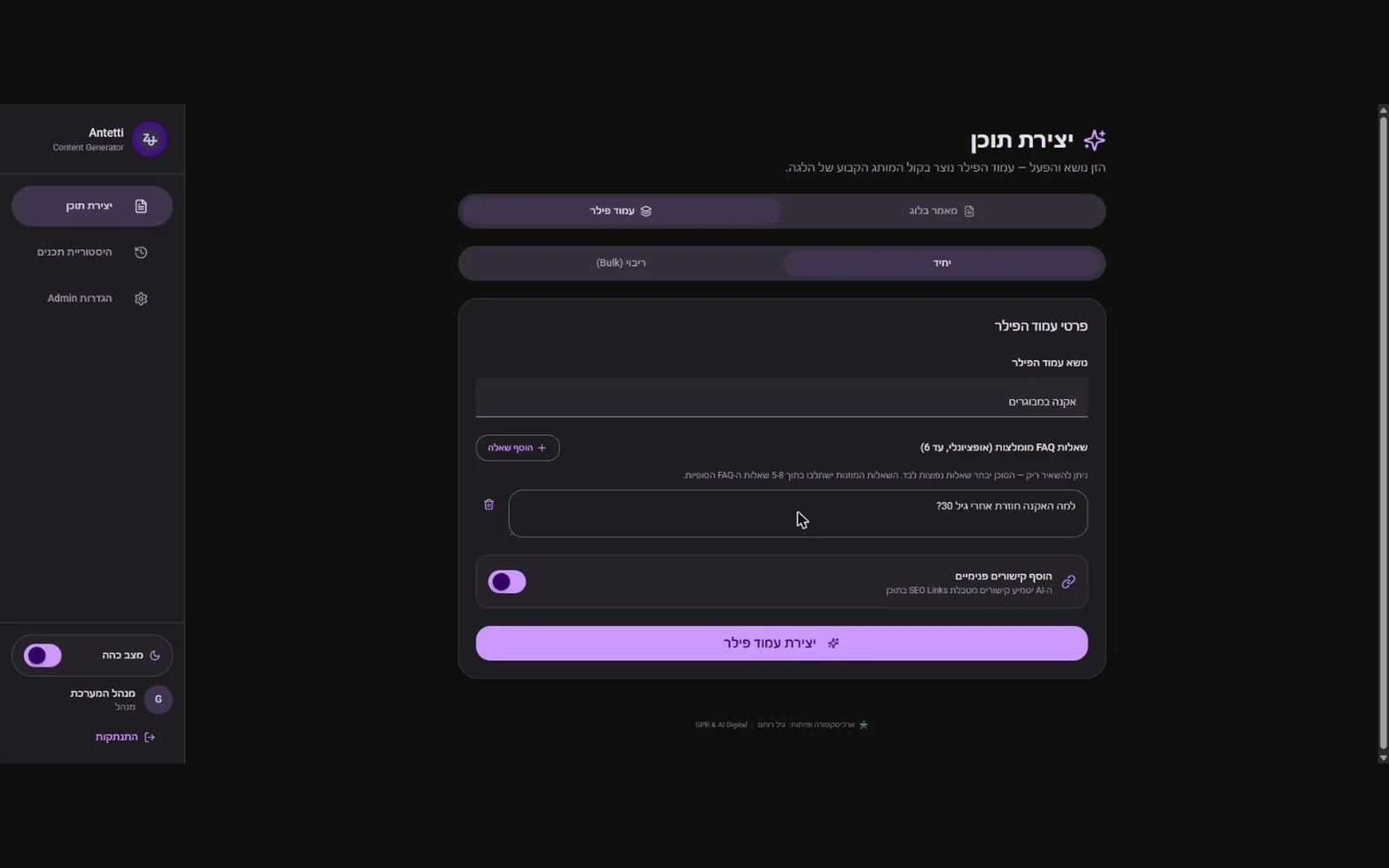
One page for each skin concern or treatment, always in the brand's fixed voice. It comes out in a set structure: a title and opening, what causes the problem from inside and outside, a three-part solution (in the clinic, at home and in diet) and five to eight frequently asked questions. You can suggest up to six questions and it works them in.
Written rules
Every field on the page has a length limit, there is a list of banned words such as "instant" and "perfect", and the length of the process for each concern is fed in as data, 90 days by default and 60 for acne. That way the model doesn't promise a result in days.
Link bank
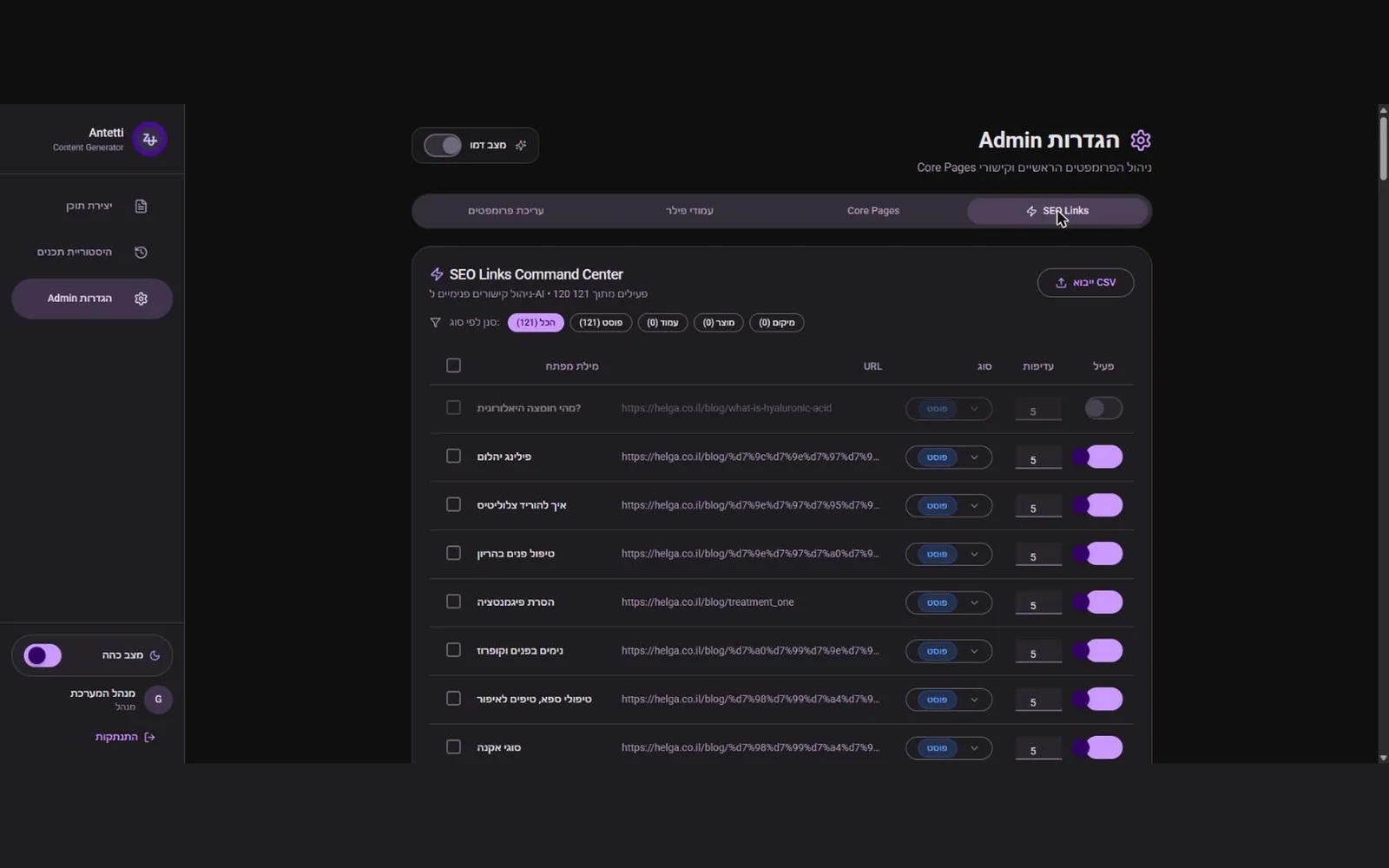
121 existing posts from her site, each with an anchor phrase, a priority and an on/off switch. When links are on, the model weaves in links only from that bank and doesn't make up addresses.
The voice as a document
The voice, the instructions and the rules aren't buried in the code. They live in documents edited from the admin screen, with a version history and a restore button.
Batch writing
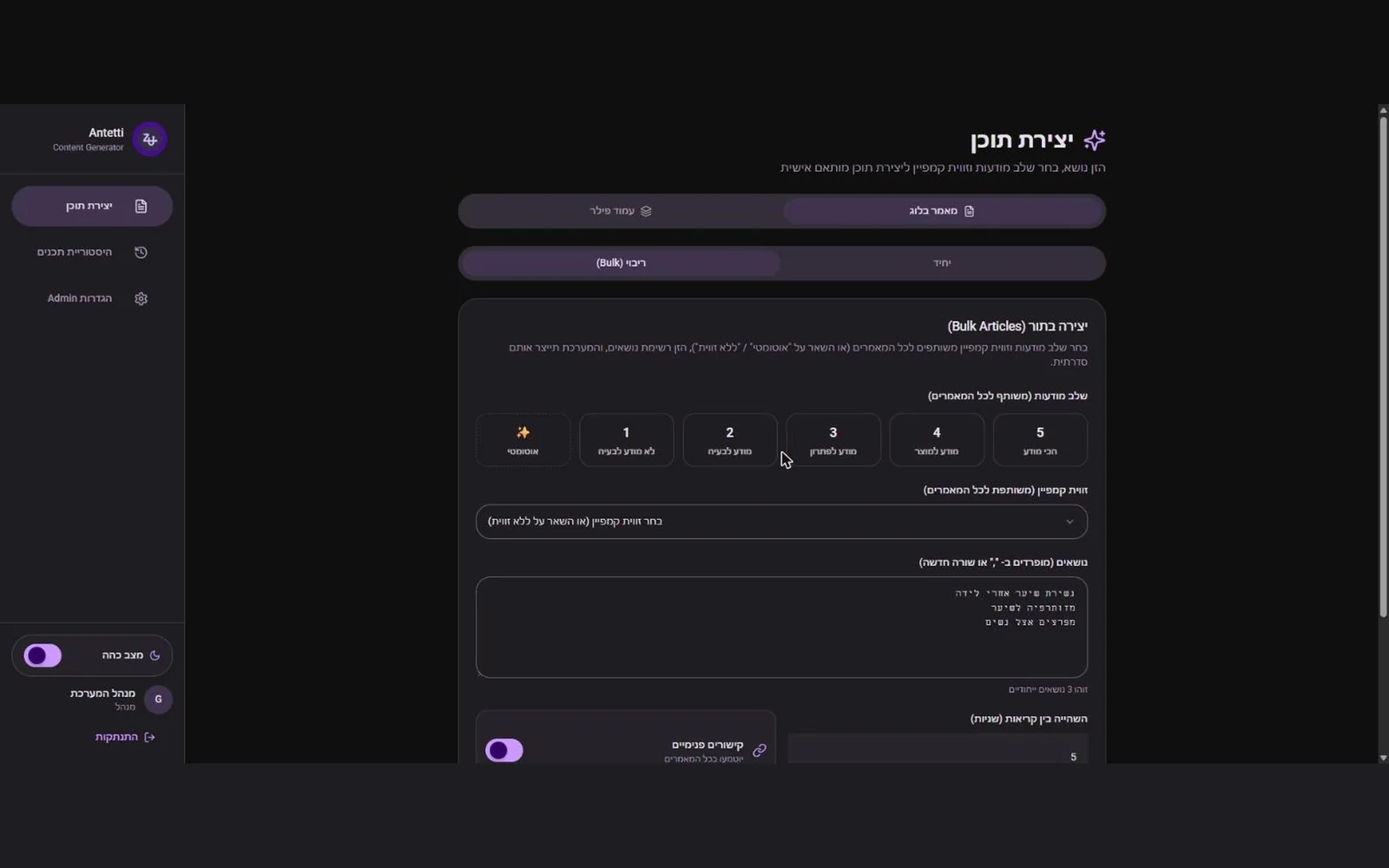
A list of topics is written one after another, with a pause between calls, a stop button and a count of what succeeded and what failed. At the end everything comes out as one file.
What it gives Helga
Helga gets text for her site that sounds like Helga. A blog article or a pillar page, as ready HTML, sent as a draft to her WordPress site or downloaded as a Word file.
A single topic can now become several articles. Each one is written for a different awareness stage or from a different angle, and the voice stays the same in all of them.
Her voice doesn't depend on me either. Whoever runs the system can tighten a rule, add a banned word, switch a link off or go back to an earlier version of an instruction, all through the interface and without touching the code.
How it's used day to day
The system has been updated several times over the past year. It runs as a private web app at its own address, with three screens: content creation, content history and settings.
To create something, you choose an article or a pillar page and type the topic. For an article you also pick the stage and the angle. Then you decide whether to weave in links, and send it off. A long list of topics goes through the queue mode.
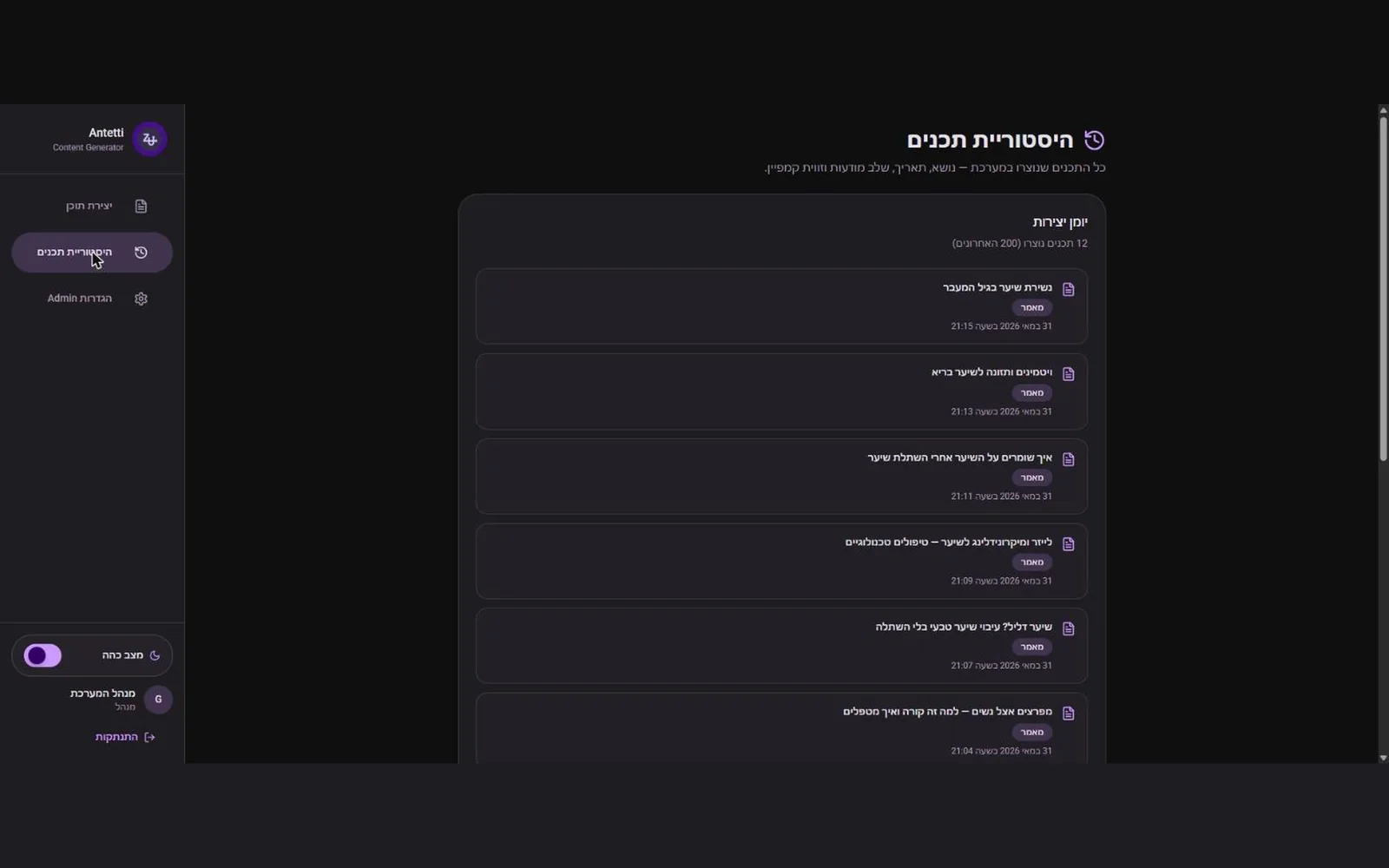
The result reaches the site as a draft, and the actual publishing happens in WordPress. Everything created is logged in the history with its topic, type and date. The settings screen is where the voice documents and the link bank are kept up to date.
Helga's system
Three screens and two agents, one after the other: the first writes as Helga, the second builds the page for her site.
What the owner does in it
- Picks the topic, awareness stage and angle
- Sends a draft to the site and publishes in WordPress
- Updates the voice documents and rules in the interface
What it's connected to
- Helga's WordPress site (drafts)
- A bank of 121 posts for internal links
- Word and TXT files
Diagram of the AI workspace for TRUE BEAUTY by Helga Rekanati: 2 agents · 3 rooms. The rooms: Content creation, Content history, Settings. Each agent is listed with its job.
Content creation
A blog article or a pillar page, one at a time or a list in the queue: topic, awareness stage, angle and links
- Identity agentStage 1: writes as Helga, in the Antetti voice: her beliefs, her words and the words she won't use
identity - SEO agentStage 2: the structure for the site, headings, the topic set as the main keyword, internal links from the bank and a banned-word check
seo
- Identity agentStage 1: writes as Helga, in the Antetti voice: her beliefs, her words and the words she won't use
Content history
Everything created, with its topic, type and date
No agents here. This is the record of what was written
Settings
The voice and instruction documents with version history and restore, the process length for each concern, and the link bank
No agents here. This is where they are steered from

Do you have a voice nobody can copy?
If your content sounds like everyone else's, talk to me.